Replacing your countertops is one of the most impactful upgrades you can make in a kitchen. But before falling in love with a specific slab at the stone yard, there is a critical factor many homeowners overlook: how that stone actually behaves inside the unique environment of your home.
Most homeowners pick the right stone for the wrong kitchen. You might find a breathtaking piece of granite under the high-intensity warehouse lights of a showroom, only to find it looks dull, dark, or cluttered once it is installed in your house. Our 3D design technology is the safety net that prevents a $10,000 mistake.
Below, we break down why the digital visualization of your project is the most important step in the remodeling process and how it protects your investment.
Why 3D visualization matters more than the slab itself
A countertop does not exist in a vacuum. It must interact with your flooring, your cabinets, and your specific lighting. Stone is a natural product with complex undertones that shift depending on what surrounds it.
Professional countertop projects at Granite Masters USA always begin with a 3D presentation. This step ensures that the vision in your head matches the reality of your finished kitchen. It allows you to “test drive” a material before a single cut is made to the stone.
Factors that change how stone looks in your home
- The “Lighting Trap”
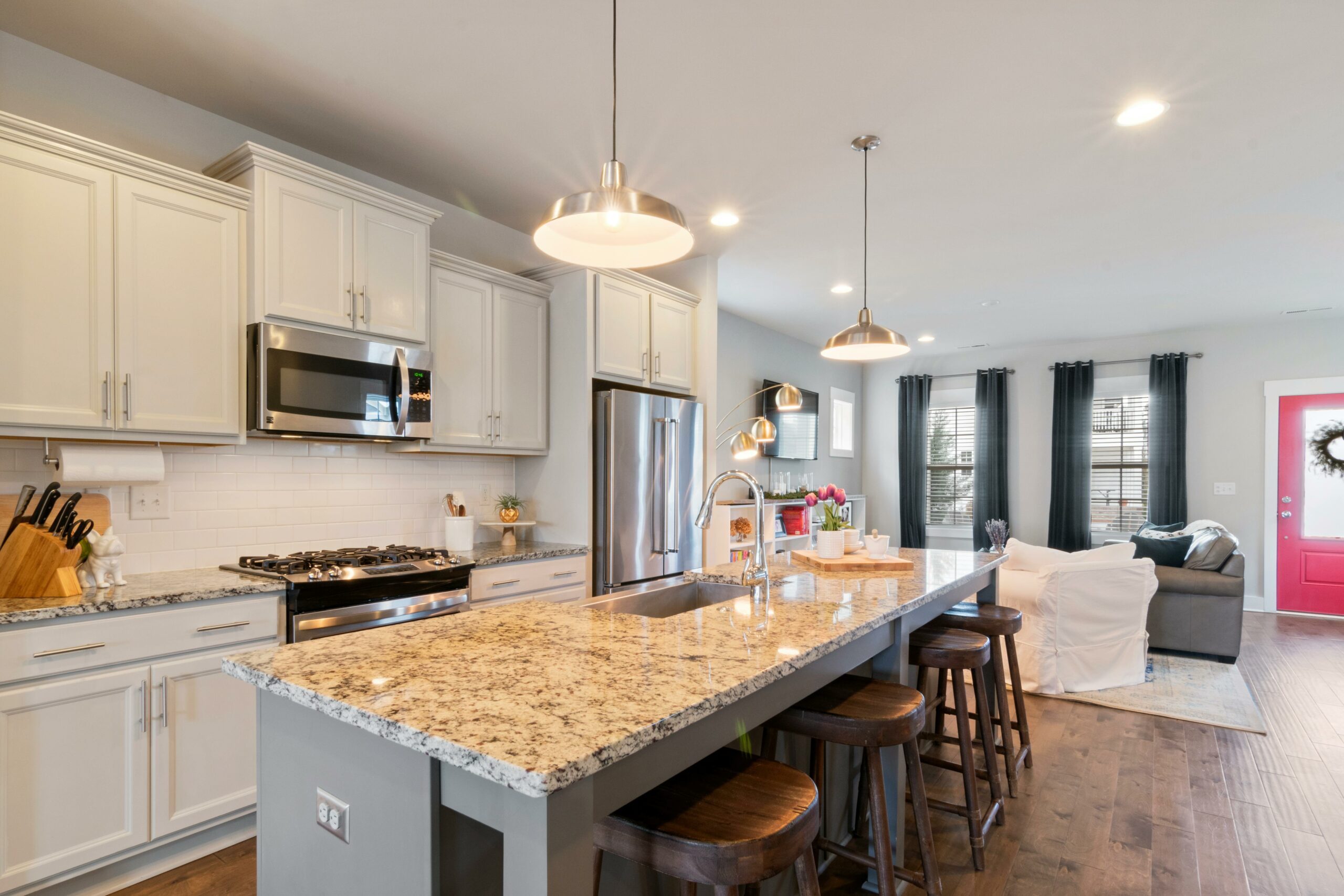
Showrooms use professional-grade lighting designed to make stone pop. Your kitchen likely uses a mix of natural sunlight and warm or cool LED bulbs. A stone that looks white in a warehouse may look yellow or grey in your home. 3D modeling accounts for these shifts.
- Cabinet color contrast
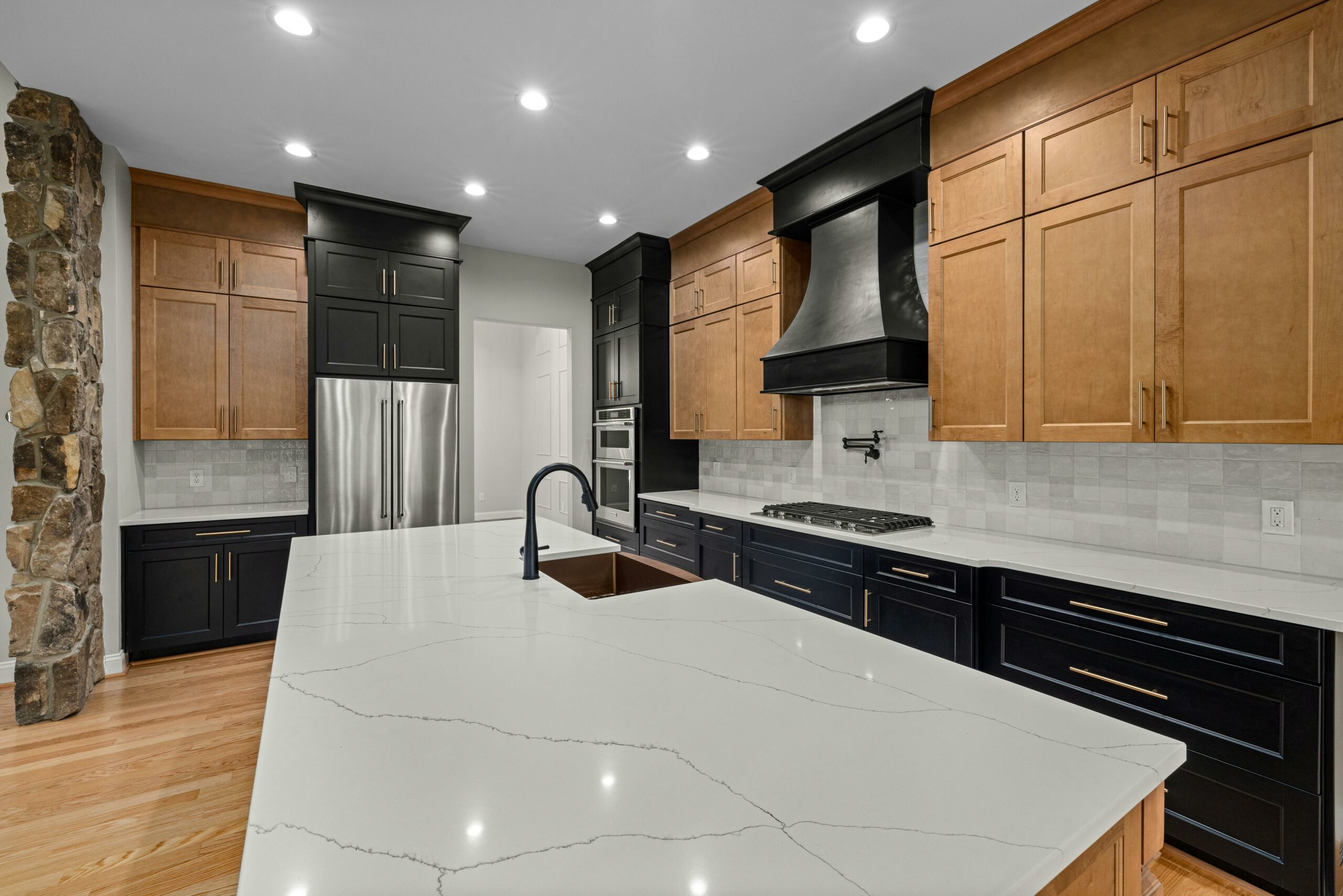
The relationship between your stone and your cabinets is the most dominant visual in the room. A busy granite pattern can make a kitchen look high-end when paired with simple cabinets, but it can look chaotic and dated if your cabinets already have a strong grain or texture.
- Room scale and “Visual Weight”
In a large, open-concept kitchen, a stone with massive, flowing veins looks like a work of art. In a smaller Myrtle Beach galley kitchen, that same pattern can make the room feel cramped and overwhelming. Seeing the scale in 3D helps you choose the right pattern size for your square footage.
- Undertone clashing
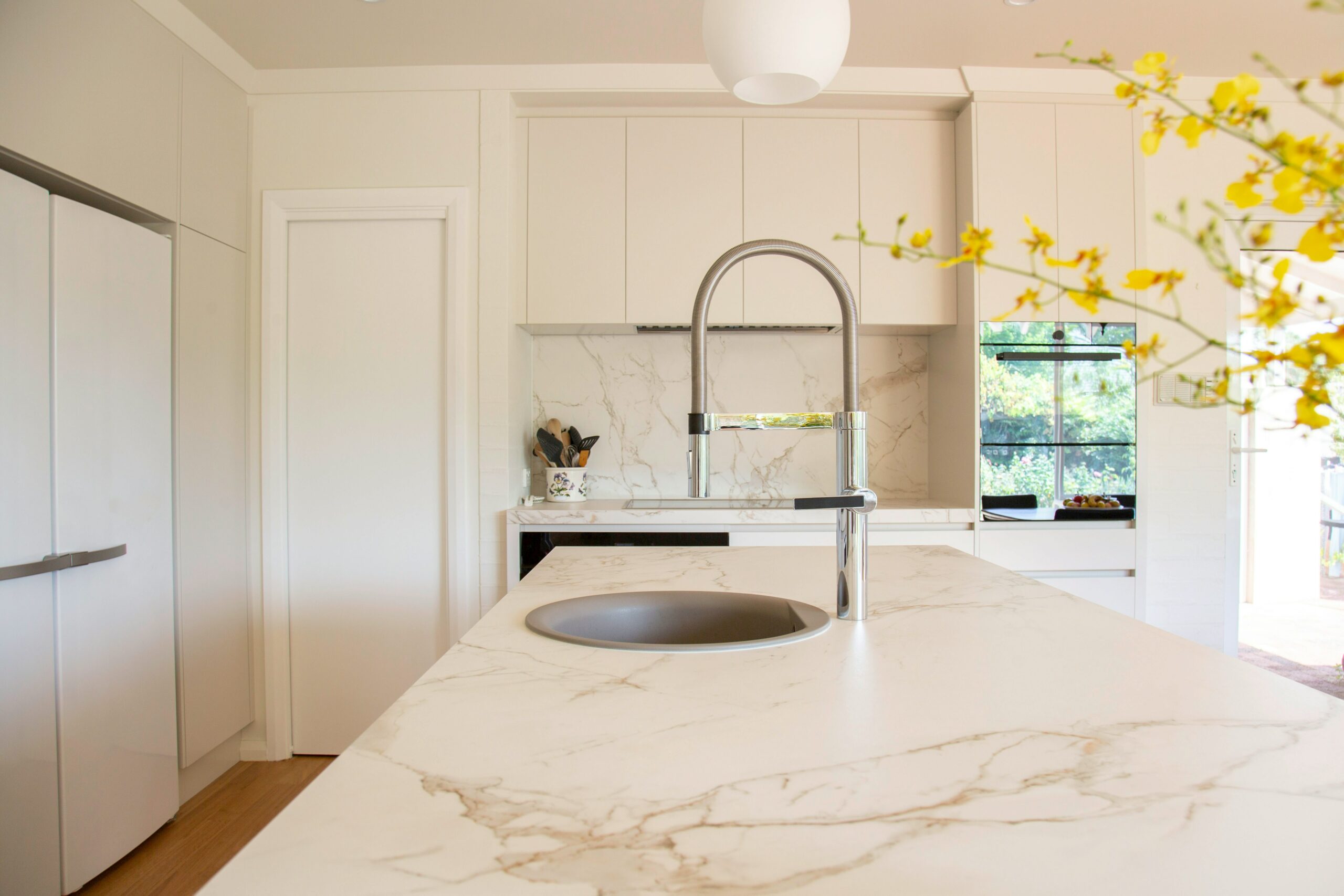
Every stone has a “hidden” undertone. Some are “cool” (blues and greys) and some are “warm” (creams and golds). If your flooring has warm undertones and you pick a cool-toned stone, the kitchen will feel “off” even if the materials are expensive. 3D design catches these conflicts early.
- Backsplash integration
Many homeowners choose a beautiful stone and a beautiful backsplash, only to realize they compete for attention. Our 3D planner allows you to see the transition from the countertop to the wall, ensuring the two materials complement rather than fight each other.
Common design mistakes our 3D tech prevents
- Poor vein placement
If you choose a stone with heavy movement, you need to know where those veins will land. 3D design prevents a “sink cutout” from removing the most beautiful part of your slab or placing a distracting pattern right at a seam.
- Choosing the wrong edge profile
The edge of your stone changes its personality. A simple eased edge looks modern, while an ogee edge looks traditional. 3D modeling shows you how these small details impact the overall “vibe” of your remodel.
- “Dark Hole” syndrome
Homeowners often want dark, moody granite. However, if your kitchen lacks natural light, a dark stone can turn the room into a “dark hole.” We use 3D previews to show you if you need to add under-cabinet lighting or pivot to a lighter stone.
- Island vs. Perimeter mismatch
A popular trend is using a different stone for the island than the perimeter. This is a high-risk design move. 3D visualization proves whether your two choices actually work together or if the combination is too distracting.
- Over-spending on the wrong features
Sometimes, a more affordable stone looks better in a specific layout than a premium one. 3D design allows us to show you different price points in real-time, helping you put your money where it will have the most visual impact.
Why this evaluation should happen before you buy
Choosing stone based on a small sample or a quick walk through a warehouse leads to surprises. A 3D presentation allows the project to move forward with total confidence.
Our experienced team uses these designs to assess:
- Pattern flows across seams
- Color harmony with existing finishes
- Visual balance and room scale
- Lighting requirements for specific stones
This approach ensures the final installation performs as well as it looks in your imagination.
Conclusion
Stone countertops are a permanent, long-term investment. Relying on your “best guess” is a risk you don’t have to take.
If you are planning to upgrade your kitchen and want to ensure your choice of stone actually works in your space, start with a professional 3D design. A digital blueprint ensures precision, beauty, and peace of mind before the first slab is ever delivered.